Renewing a motorcycle COE
A Cat D renewal works like a car's, with the same PQP formula and the same once-only 5-year rule. The cost is smaller. Two rules matter most: the 5-year renewal can be used only once, and bikes registered before July 2003 must come off the road by 30 June 2028.
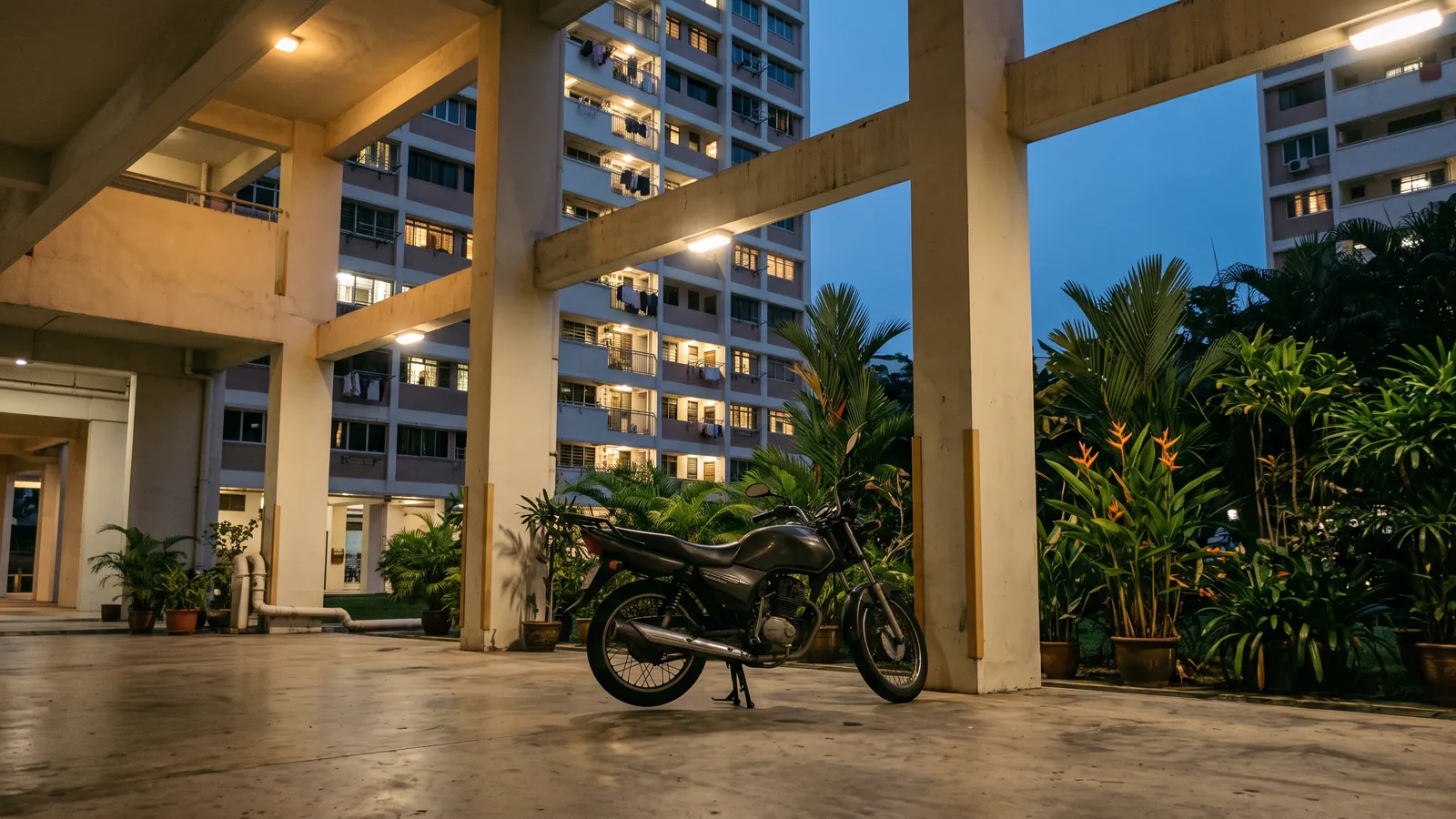
To renew a motorcycle COE you pay the Cat D Prevailing Quota Premium (PQP): the full PQP for 10 years or 50% for 5 years. For Cat D the 5-year renewal can be taken only once, after which the bike must be deregistered. Renew before expiry or within 1 month after with a $50 late fee. Bikes first registered before 1 July 2003 reach their statutory lifespan on 30 June 2028.
How a motorcycle COE renewal works
Every motorcycle in Singapore runs on a Category D COE, and like a car's, it lasts 10 years. When it runs out you either renew it or deregister the bike. Renewing means paying the Prevailing Quota Premium (PQP) for Cat D, which LTA sets as the moving average of Cat D COE prices over the last 3 months in which bidding took place.
For October 2026, the Cat D PQP for a 10-year renewal is $11,161. A 5-year renewal costs 50% of that, rounded up to the nearest dollar: $5,581. The exact rate you pay depends on the date you renew and your COE expiry date, so check the figure LTA shows you on the day. Our PQP explainer covers how the average moves.
You must renew before the COE expires, or within 1 month after expiry with a $50 late renewal fee for a motorcycle. Miss that month and LTA requires you to dispose of the bike immediately. If you are not sure of your date, see how to check your COE expiry date.
5 years or 10 years for a bike
The cost per year of road time is the same either way: half the PQP for half the time. What differs is what you can do afterwards, and for Cat D that difference is large.
| 5-year renewal | 10-year renewal | |
|---|---|---|
| What you pay | 50% of the Cat D PQP | 100% of the Cat D PQP |
| Renew again after? | No. Cat D can take the 5-year renewal only once | Yes, in further 10-year periods |
| Loan tenure | Up to 5 years | Up to 118 months, subject to the lender |
LTA's rule: for Categories A, B and D, you can renew for 5 years only once, and when that period ends you cannot renew again. A 10-year renewal has no such limit for bikes with no statutory lifespan, so you can keep renewing in 10-year blocks.
If the bike is your daily transport and in good shape, the 10-year renewal keeps your options open. Take the 5-year only if you are fairly sure you will stop riding this bike, or move to a new one, within 5 years.
The full trade-off, including how the financing changes, is in 5-year vs 10-year COE.
Bikes registered before 1 July 2003
For these bikes, renewing rarely pays, so check carefully first. LTA gives motorcycles first registered before 1 July 2003 a statutory lifespan that expires on 30 June 2028. Bikes registered from 1 July 2003, and bikes under the Vintage or Classic Vehicle Scheme, have no statutory lifespan.
Once a vehicle reaches the end of its statutory lifespan, LTA says its COE can no longer be renewed and the vehicle is deregistered. So for an older bike, a renewal buys road time only up to mid-2028, not a full 5 or 10 years. Check OneMotoring for what applies to your bike before you pay anything.
What else you pay after renewing
The PQP is the big number, but it is not the only running cost on a bike past 10 years.
- Inspection. Motorcycles and scooters 3 years and older go for inspection annually. A bike at its first COE expiry is already on that cycle. An inspection done more than 3 months before its due date is not valid for road tax renewal.
- Road tax. You renew for 6 or 12 months, and insurance must cover the whole period. LTA applies a road tax surcharge to vehicles over 10 years old; use OneMotoring's road tax enquiry to see what your bike will pay.
- No PARF. LTA's PARF rebate is only for cars and taxis, so a bike gets nothing from PARF when it is scrapped. If you deregister a renewed bike before the COE ends, you may get a COE rebate on the unused portion. See PARF and COE rebates.
If you want the full list for an older vehicle, our guide to vehicles over 10 years covers the same three costs for cars.
Financing a motorcycle COE renewal
Yes, renewal financing exists for bikes, though it is a smaller market than for cars. A few points that hold either way:
- The loan covers the PQP. It cannot run longer than the renewal, so a 5-year renewal means 5 years at most.
- Renewal loans are usually quoted as a flat rate, which reads lower than the same loan quoted as an effective rate. Compare like with like.
- A Cat D PQP is a much smaller sum than a car's, so for some riders paying in cash, or part cash, makes more sense than a loan.
Meyer mainly arranges loans for car COE renewals. If you want to finance a motorcycle renewal, ask us and we will check whether a lender will take it, and on what terms, before you commit to anything. Any loan is subject to lender approval.
For how renewal loans work in general, read COE renewal loans.
Renewing vs buying a new bike
Renewing costs the Cat D PQP. Buying new costs the bike, its registration taxes, and a fresh Cat D COE at whatever the latest bidding round cleared. You can see recent prices on our COE results page. Because the PQP is an average of recent rounds, the COE part is often in the same range either way, so the decision usually comes down to the bike itself.
Renew if the bike runs well, passes inspection without major work, and you want to keep riding it for years. Buy new if a big repair is coming, parts are getting hard to find, or you want a different bike anyway. Don't renew a pre-July 2003 bike for road time it cannot use past 30 June 2028.
The same logic for cars is laid out in renew or scrap.
What we'd check for your bike
If you message us about a motorcycle renewal, we would look at four things: the first registration date (before or after 1 July 2003), the COE expiry date, whether a 5-year renewal has already been used, and the October 2026 Cat D PQP against what you would pay for a new bike. We charge no admin or processing fees. If you choose to finance and a lender approves it, we file the renewal with LTA for you.
Questions people ask
Get your real numbers
Tell us your COE category and expiry date. We'll come back with your renewal cost, your rebate position and the full perk list, same day. No pressure, no obligation.
in bundled perks with every renewal — free vehicle health check, engine + gearbox warranty credit & more. Rate locked for 30 days.
 The Big Decision
5-year or 10-year COE renewal?
A 5-year COE renewal costs half a 10-year one — for half the road time. So what are you really choosing? The cost per… Financing Financing