Renew your COE,
or scrap the car?
When your COE hits 10 years you face one real choice: pay to keep the car, or deregister it and take the rebate. It feels like a decision about a car you might love. Really it's a money question — and here's how to work out which way the numbers point for you.

It's a money question, not a heart one
After 10 years your COE expires and the car cannot stay on the road without action. You have two real options: renew the COE (pay the PQP to keep driving) or deregister (scrap or export the car and collect a rebate). Everything else is a variation on those two.
Most people who lose money at this decision decided with their heart — keeping a car that was about to need major work, or scrapping a perfectly sound one for a rebate that didn't cover what they gave up. The trick is to run it as numbers first, feelings second.
There's also a timing element people miss. The decision has a deadline attached to it: your COE expiry date. Leave it too late and your options narrow to whatever can be arranged in a hurry, which is rarely the cheapest version of either path.
What each path actually costs
Renewing means paying the PQP — currently around $123,000 for a Cat A car — and, importantly, forfeiting your PARF rebate. Deregistering means giving up the car but collecting that rebate plus any scrap or export value. Here's the honest side-by-side:
| Renew the COE | Deregister (scrap/export) | |
|---|---|---|
| You pay / receive | Pay the PQP | Receive PARF + COE rebate |
| PARF rebate | Forfeited | Paid out to you |
| Keep the car? | Yes — 5 or 10 more years | No — the car is gone |
| Upfront cash needed | $0 with financing | Whatever a replacement demands |
| Ongoing cost | Road-tax surcharge + upkeep rise | Starts fresh with a new car's costs |
The number that decides it isn't the PQP alone — it's the PQP plus the PARF rebate you give up, weighed against the depreciation you'd absorb on a replacement car over the same years. That combined figure is the true cost of renewing, and it's the one most comparisons leave out.
Worth being precise about the road tax point, because it surprises people: from the 10-year mark a surcharge applies on top of your normal road tax, rising each year the car ages, up to a cap. It is a real recurring cost of renewing and it belongs in your maths — but it is measured in hundreds a year, not thousands, and it rarely reverses a decision on its own.

The "just buy new" trap
It feels clean to scrap an old car and start fresh. But a new car doesn't escape the COE — you pay a brand-new COE on top of the car price, plus a substantial downpayment under MAS loan limits. Renewing, by contrast, can be financed with $0 down.
Renewing almost always wins on cost — if the car is mechanically sound. A well-kept car has already paid off its most expensive years of depreciation. Renewing buys another decade for a fraction of starting over. The maths only flips when the car is heading into serious repairs.
Depending on the current PQP and your car's condition, renewing can save $20,000 to $50,000 versus buying a comparable replacement. That's not a reason to always renew — it's a reason to run your own numbers before assuming "new" is automatically smarter.
Where the argument genuinely does flip: if the car needs work approaching the value of the rebate you'd forfeit, or if it's a model with known expensive failure points right at this age, or if your annual mileage has dropped so far that you're financing a car you barely use. Those are real reasons to deregister, and we'll say so if we see them.
When scrapping genuinely wins
We finance renewals, so it would be easy to write a page that concludes "always renew." That isn't honest, and it wouldn't survive contact with reality. There are real situations where deregistering is the better call:
The car needs work approaching its rebate value
If the inspection comes back with a failing gearbox or significant structural rust, you're being asked to pay the PQP and a major repair bill, while forfeiting a rebate. That's three costs stacked against one benefit.
Your driving has fundamentally changed
If you've moved somewhere well served by public transport, changed jobs, or your annual mileage has collapsed, the question isn't renew-or-replace — it's whether you need a car at all. Financing a vehicle you use twice a week is an expensive habit.
The monthly genuinely doesn't fit
$0 downpayment makes renewal accessible, but the instalment is still real money for five to ten years. If it only fits by stretching to the longest possible tenure and hoping nothing else goes wrong, that's a signal worth listening to.
You want something the car can't be
If you need seven seats and have five, or your circumstances have changed in a way the current car simply doesn't serve, no financial argument fixes that. Cost isn't the only valid input — it's just the one people underweight.
If you're in one of these situations, we'll say so. A renewal that turns into a regret six months later is worth less to us than an honest conversation now.
The inspection: what actually matters
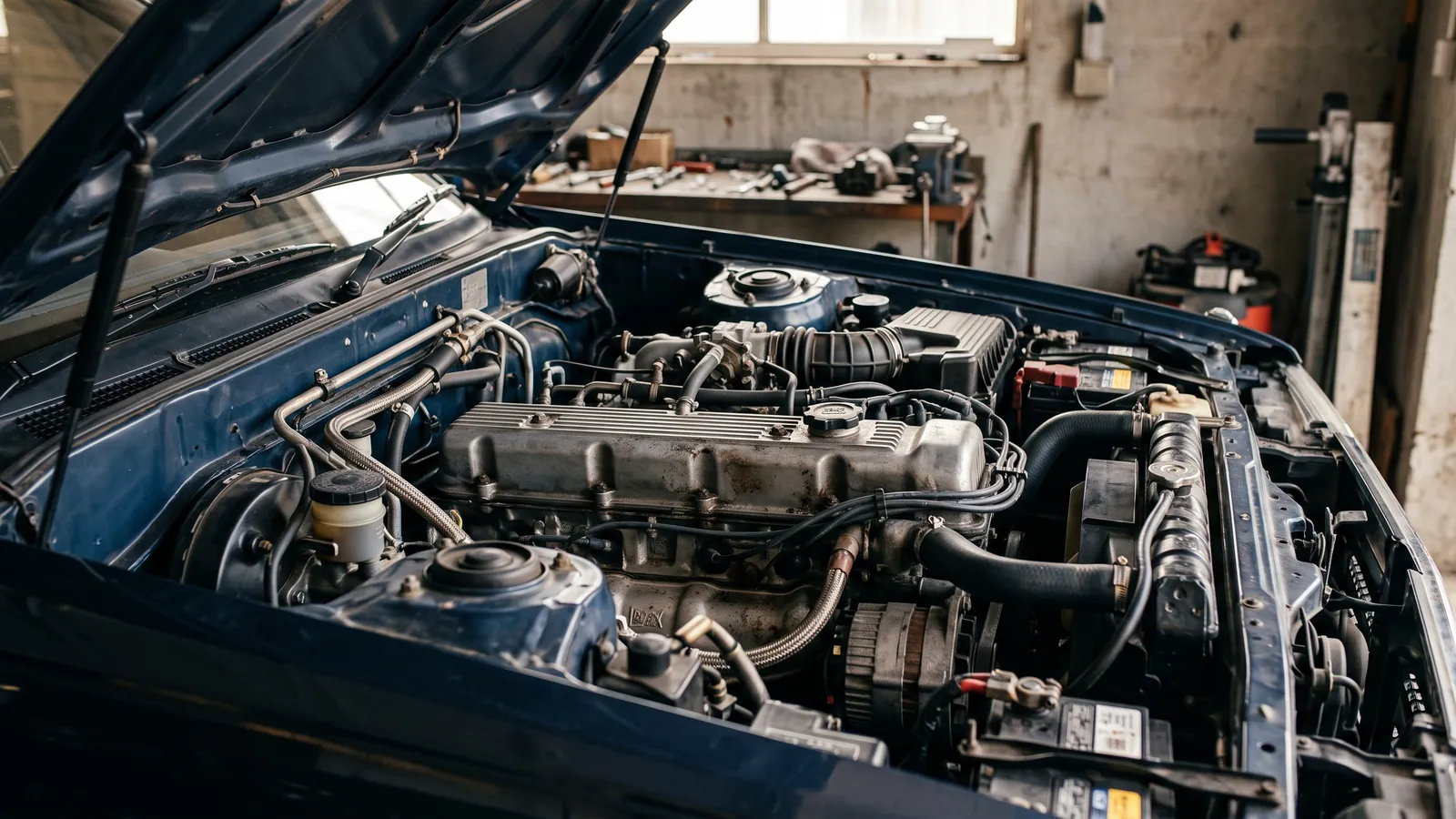
"Get it inspected" is easy advice to give and easy to do badly. A standard pre-purchase check answers what is wrong today. For a renewal decision you need a different question answered: what is likely to fail in the next five to ten years, and what will that cost?
Ask your workshop to look specifically at the systems where age, rather than mileage, drives failure:
| System | Why it matters at 10 years | If it's bad |
|---|---|---|
| Engine & gearbox | The two genuinely expensive failures. Everything else is comparatively minor. | Can change the decision |
| Rust & underbody | Structural corrosion is expensive, spreads, and is often hidden. | Can change the decision |
| Suspension & bushings | Perishes with age regardless of mileage. Very common at this point. | Budget item, not a dealbreaker |
| Cooling system | Hoses, radiator, water pump all age out around now. | Budget item, not a dealbreaker |
| Electronics & sensors | Increasingly the annoying failures on modern cars. | Budget item, not a dealbreaker |
Notice how few items sit in the "can change the decision" column. That's the useful insight: most of what an inspection turns up on a ten-year-old car is predictable maintenance you can budget for, not a reason to give up on the vehicle. Two things genuinely move the needle — the drivetrain and structural rust.
Add up the likely repair spend over the next five years. If it's meaningfully less than the rebate you'd forfeit by renewing, renewing is probably right. If it's approaching or exceeding that figure, you're financing a car that's about to ask for the money back.
Export: the option people forget
Most people treat this as a binary — renew or scrap. There's a third path that often pays better than scrapping: exporting the car.
Well-maintained Japanese and Continental models hold genuine value in regional markets. An exporter may pay meaningfully more than a local scrapyard for exactly the same vehicle, because they're valuing a working car rather than its materials. You still collect your COE rebate, and where applicable your PARF rebate, on top of what the exporter pays.
Export must be completed through an approved processor and before your COE expires. It also takes longer to arrange than a scrapyard appointment. If you're leaning toward deregistering, start getting export quotes early — not in the final fortnight, when the timeline forces your hand.
Get both numbers before committing to either. The gap between a scrap quote and an export quote on a desirable, well-kept model can be substantial, and it costs nothing but a few phone calls to find out which side of that gap you're on.
Timing, and why it costs money
Whichever way you go, when you decide matters nearly as much as what you decide.
The renewal cost itself moves. The PQP is a three-month rolling average of COE prices, so it shifts month to month in a fairly readable way — if premiums have been climbing, next month's PQP will likely be higher. Renewing a month earlier or later can genuinely change what you pay, but only if your expiry date leaves you the room to choose.
There's a trap in the other direction too. Renewing early forfeits the unused portion of your current COE — your new one starts from the first of the month following renewal, and whatever's left on the old one simply goes. So "renew early to beat a price rise" is not automatically clever; it depends on how much unused COE you'd be throwing away.
Get the mechanical assessment done while you still have every option open and no deadline pressure.
Your rebate figure from OneMotoring, your renewal cost, and if you're considering deregistering, both scrap and export quotes.
Enough runway to arrange financing or an export properly, without the expiry date choosing for you.
The single most expensive version of this decision is the one made in the last two weeks, when there's no time to inspect, no time to compare, and no time to do anything but take whatever is available. Everything above is really just a way of avoiding that.
How to make the call
Work through it in this order — the sequence matters, because a financial decision about a car whose condition you don't know is just a guess with a spreadsheet attached:
Get an honest mechanical assessment — not "what's broken now" but "what's likely to fail over the next five years." This single step changes the whole calculation.
Check your PARF + COE rebate on LTA's OneMotoring. That's the money you forfeit by renewing — it belongs in the comparison, not as an afterthought.
Renew cost (PQP + forfeited rebate + upkeep) against the depreciation on a replacement over the same years. The answer usually announces itself.
One option people overlook: exporting the car instead of scrapping it. Well-kept Japanese and Continental models are in demand regionally, and export can pay more than local scrap — but it has to happen before the COE expires. If you're leaning toward deregistering, get both numbers before you commit to either.
And whichever way you're leaning, a pre-renewal inspection is the smartest $150 you'll spend — free when you renew through Meyer, along with a vehicle health check at our partner workshop. Knowing the car's real condition is what turns this from a gut call into a decision.
Get your real numbers
Tell us a little about your car. We'll come back with your exact renewal cost, your rebate position, and the full perk list — same day. No pressure, no obligation.
in bundled perks with every renewal — free vehicle health check, engine + gearbox warranty credit & more. Rate locked for 30 days.
 Your Money Back
PARF & COE rebates, explained simply
What the PARF and COE rebates are, who qualifies, how they're worked out, and exactly what you forfeit if you renew… COE Basics COE Basics