PARF & COE rebates,
explained simply
When you deregister your car, LTA pays you back part of what you put in. It's called your PARF and COE rebate — together, your car's “paper value.” Here's what each one is, who qualifies, and exactly what you give up if you renew instead.
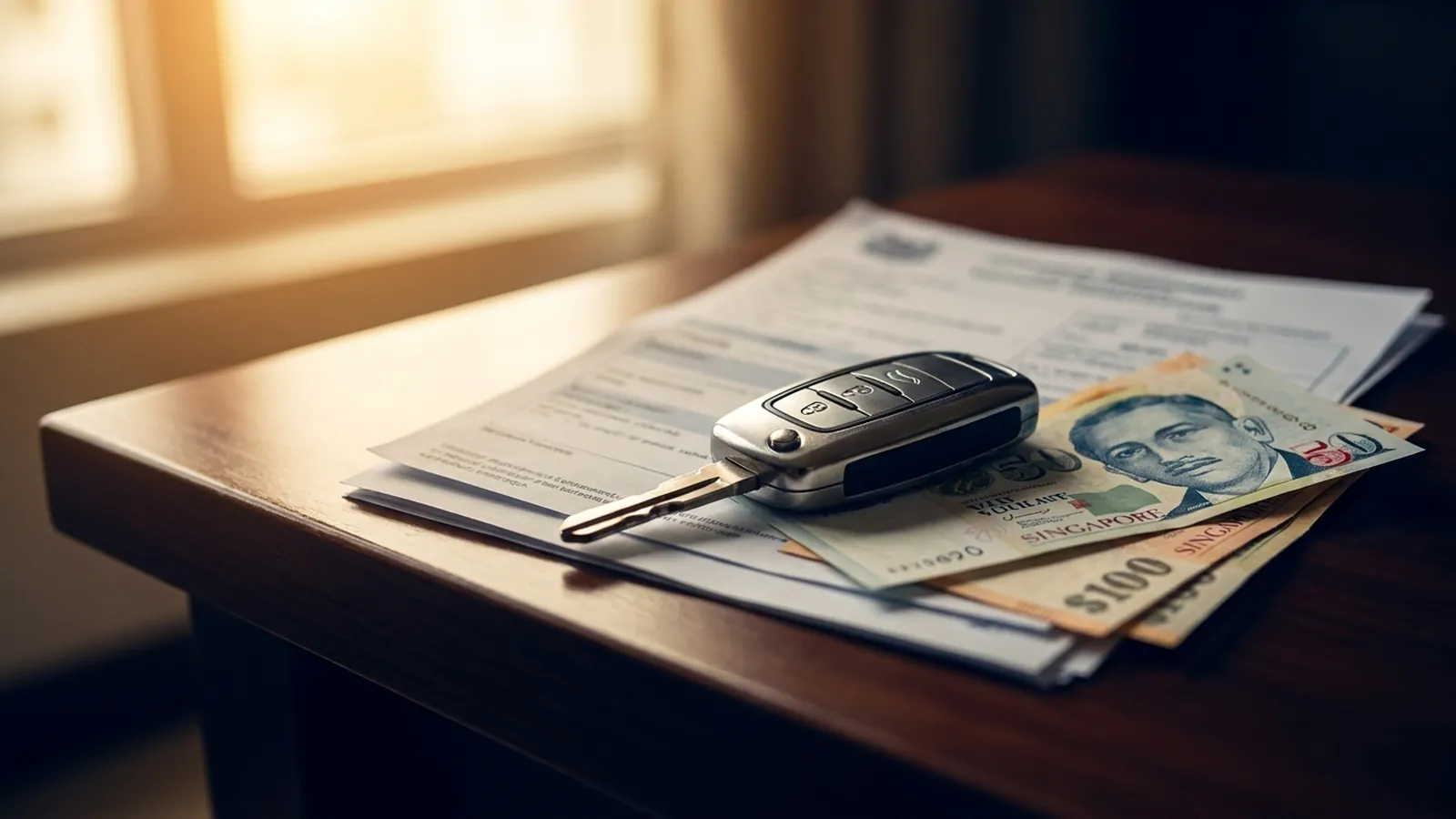
Two rebates, one payout
When you deregister a car in Singapore, LTA may refund you two separate things. Together they're often called your car's "paper value" or deregistration value — and for a car approaching its 10-year mark they can add up to real money.
PARF rebate
A partial refund of the ARF (Additional Registration Fee) you paid when the car was first registered. You only receive it if you deregister before the car turns 10 — and only if the COE has never been renewed.
COE rebate
A pro-rated refund of the unused portion of your COE if you deregister before it expires. It's based on the Quota Premium (or PQP) you last paid, scaled to the number of months remaining. Deregister with 18 months left and you get roughly 18 months' worth back.
The distinction matters because the two behave differently. The COE rebate is essentially your own unused prepayment coming back. The PARF rebate is a one-time entitlement tied to the car's first ten years, and once it's gone it does not return.
How each rebate is worked out
Both rebates follow published formulas. Neither is discretionary, and neither depends on what your car would fetch on the used market — a point that surprises people who assume a well-kept car earns a bigger rebate. It doesn't.
The PARF rebate
The PARF rebate is a percentage of the ARF you originally paid, and the percentage falls the older the car is at deregistration. The long-standing schedule steps down roughly as follows:
| Age at deregistration | Cars registered before Feb 2026 | Cars registered from Feb 2026 |
|---|---|---|
| Not more than 5 years | 75% of ARF | 30% of ARF |
| Above 5, up to 6 years | 70% of ARF | 25% of ARF |
| Above 6, up to 7 years | 65% of ARF | 20% of ARF |
| Above 7, up to 8 years | 60% of ARF | 15% of ARF |
| Above 8, up to 9 years | 55% of ARF | 10% of ARF |
| Above 9, up to 10 years | 50% of ARF | 5% of ARF |
| More than 10 years | Nil | Nil |
| Rebate cap | $60,000 | $30,000 |
If your car is approaching its COE expiry now, the left-hand column is yours. A car reaching ten years today was registered around 2016 — long before the February 2026 cutoff — so it keeps the original schedule and the $60,000 cap. The right-hand column is what newly registered cars will face; more on that below.
Two things follow from the table. First, the entitlement is halved by the ten-year mark — it declines steadily throughout the car's first COE. Second, it goes to zero the moment the car passes ten years, which is exactly when the renewal decision lands. There's no partial credit for renewing slightly early.
Note the cap as well as the percentage. However expensive the car was, the PARF rebate is limited — $60,000 under the original schedule. On a high-ARF car the cap, not the percentage, may be what actually determines your rebate.
Because the rebate is a percentage of ARF, and ARF is calculated from the car's OMV on a tiered scale, more expensive cars carry substantially larger PARF entitlements. For a modest hatchback the forfeited rebate might be a few thousand dollars. For a large Continental saloon it can run well into five figures — and that changes the renewal maths considerably.
The COE rebate
The COE rebate is simpler: it's the unused portion of what you already paid, returned pro-rata. Deregister a 10-year COE with 24 months left and you get back roughly two tenths of the premium you paid. The formula is essentially the quota premium paid × months remaining ÷ 120.
This one applies whether or not the car has been renewed before, which is why a renewed "COE car" still has a rebate — just not a PARF one.
Rebate schedules are revised from time to time. Treat the table above as the shape of the thing rather than a quote — your exact entitlement is shown against your vehicle on LTA's OneMotoring, and that's the number to plan around.

Who gets the PARF rebate?
The PARF rebate is the larger of the two for most cars, but it carries strict conditions. Your car qualifies if:
| Situation | Gets PARF? | What you receive |
|---|---|---|
| Under 10 years oldCOE never renewed | Yes | Full PARF + COE rebate |
| COE has been renewednow classed as a "COE car" | No | COE rebate only |
| Over 10 years, COE expiredfully run out | No | Neither rebate |
The amount is based on your car's age at deregistration and the ARF originally paid — the older the car, the smaller the percentage returned. The moment you renew your COE, the car becomes a "COE car" and the PARF is forfeited permanently. That trade-off is the entire point of counting it before you decide.
A common misunderstanding worth clearing up: the PARF rebate is calculated from the ARF, not from what your car is worth on the used market today. Two identical cars can have very different rebates if one was registered when ARF rates or OMV values were higher. Your registration documents, not a valuation site, are the source of truth here.
The 2026 PARF change
Announced in the Budget 2026 statement and confirmed by LTA on 12 February 2026, the PARF rebate schedule has been cut substantially — and the cap halved from $60,000 to $30,000. The headline numbers are dramatic: for a car deregistered between nine and ten years old, the rebate drops from 50% of ARF to 5%.
LTA's stated reasoning is that PARF exists to encourage timely renewal of the vehicle population so it stays safer and less pollutive — and as EVs become more commonplace, the need to push early deregistration falls away.
The revision applies to cars registered with COEs obtained from the second COE bidding exercise of February 2026 onwards. If you already own the car and it's approaching its first COE expiry, you are on the original schedule — 75% down to 50%, capped at $60,000. Your entitlement has not changed. For cars that don't need a COE to register, such as taxis and COE-exempt cars, the new schedule applies from 13 February 2026.
So if you're weighing renewal on a car you already own, the alarming headlines are not about you. Read the left-hand column of the table above and ignore the rest.
Where it matters enormously is buying used. A car registered before the cutoff carries a far more generous PARF entitlement than an otherwise identical car registered after it — potentially tens of thousands of dollars of difference in what the car is ultimately worth to you. Registration date is now one of the most important numbers on a used car's paperwork, and it is rarely reflected in the asking price.
It also shifts the long-run renewal calculation for cars registered from 2026 onward. When the PARF rebate at ten years is only 5% of ARF, the amount you forfeit by renewing becomes far smaller — which makes renewing relatively more attractive than it is today. That's a consideration for the 2036 decision, not this one, but it's worth knowing which way the wind is blowing.
Because these schedules do get revised, treat any figure you read online — including ours — as a guide rather than a quote. Your exact entitlement is shown against your vehicle on OneMotoring, and that's the number to plan around.
A worked example
Take a Cat A car approaching its tenth year, registered well before the February 2026 cutoff so it sits on the original schedule, with an ARF of around $20,000 and three months left on its COE. Here's what's actually on the table:
| If you deregister | If you renew for 10 years |
|---|---|
| PARF rebate: ~$10,00050% of $20,000 ARF at 9–10 years | PARF rebate: forfeited |
| COE rebate: ~$3,0003 months remaining of the premium paid | COE rebate: forfeited by renewing early |
| Scrap or export value: varies | You keep the car |
| You receive ~$13,000+ | You pay the PQP (~$123,000) |
So the true cost of renewing this particular car isn't $123,000. It's the PQP plus the roughly $13,000 in rebates you're walking away from — call it $136,000 in total economic cost for ten more years of driving.
That sounds like a lot until you put it against the alternative. A comparable replacement means a fresh COE at full market price, a new car's ARF, a substantial downpayment under MAS financing limits, and a decade of steep early depreciation. Which is why renewing still tends to win — but you should reach that conclusion having counted the rebate, not by ignoring it.
Scale the example to your own car by substituting your ARF. The proportions hold: the higher the original ARF, the more the PARF forfeiture weighs against renewing, and the more carefully the comparison deserves running.
Getting your money out
Once you deregister and properly dispose of the car, the rebate is yours. A few practicalities worth knowing before you start:
Dispose at an LTA-appointed scrapyard, or export through an approved processor. Export often pays more for desirable models — get both quotes before committing.
You have 12 months from deregistration to take the rebate as cash, or use it to offset the registration cost of a new vehicle.
LTA holds the rebate until any outstanding fines are settled. Sort these before you deregister to avoid a delayed payout.
If there's still finance outstanding on the car, the rebate typically goes toward settling the loan before anything reaches you — so check your settlement figure early rather than budgeting around the full rebate amount.
Your rebate figure is the number that belongs on the other side of the renew-or-scrap decision. It's what you're giving up to keep the car. Check your exact figure on LTA's OneMotoring, or ask us and we'll work it out with you alongside your real renewal cost, so you're comparing like with like.

Rebates and the renewal decision
Putting it together, the rebate figure does three jobs in a renewal decision, and it's worth being explicit about each.
It sets the true cost of renewing
Renewal cost = PQP + forfeited rebates. That's the number that belongs opposite the cost of a replacement, and it's the one most comparisons quietly omit.
It sets your repair budget threshold
If the car needs work approaching the rebate value, you're paying twice — once in repairs, once in forfeited rebate — to keep a vehicle that's already telling you something. That threshold is a useful, concrete decision rule.
It's the deposit on whatever comes next
If you do deregister, the rebate can be used to offset the registration cost of a replacement rather than taken as cash. For anyone moving to a new car, that materially softens the downpayment — and it's the main reason the "just buy new" path isn't quite as punishing as the headline numbers suggest.
Find your rebate figure before you decide anything else. It's the pivot the whole comparison turns on — and it takes about two minutes to look up on OneMotoring. Deciding without it is guessing with extra steps.
If you'd rather not work through it alone, tell us your car and COE expiry and we'll put both sides on one page: your rebate position, your real renewal cost, and what each path leaves you with. No obligation, and we'll tell you if deregistering is the better call.
Get your real numbers
Tell us a little about your car. We'll come back with your exact renewal cost, your rebate position, and the full perk list — same day. No pressure, no obligation.
in bundled perks with every renewal — free vehicle health check, engine + gearbox warranty credit & more. Rate locked for 30 days.
 The Big Decision
Renew your COE, or scrap the car?
Renew your COE or deregister and take the rebate? What each path costs, the PARF rebate you forfeit by renewing, and… COE Basics COE Basics